 Michael R. Bailey
History rarely announces itself as repetition. It arrives instead as familiarity—new language wrapped around old behavior. What is unfolding around Venezuela in the mid-2020s has that quality. For many observers across the Global South, and for minority communities who study power through memory rather than abstraction, the moment feels unsettling not because it is unprecedented, but because it is recognizable.
To understand why Venezuela has become such a flashpoint, it is necessary to step back—not years, but decades—and examine how the United States has historically framed, labeled, and acted against non-white nations it deems disruptive to its global order.
1986: Libya and the Terrorism Justification
On April 15, 1986, the United States launched Operation El Dorado Canyon, bombing Tripoli and Benghazi. The Reagan administration justified the strikes as retaliation for Libyan-sponsored terrorism, following the Berlin discotheque bombing ten days earlier. Libya’s leader, Muammar Gaddafi, had already been formally designated a supporter of terrorism by the U.S. government.
The label mattered. Once terrorism entered the narrative, the bombing of a sovereign African nation became politically defensible. Civilian casualties were acknowledged but subordinated to the claim of moral necessity. Libya would remain under sanctions for much of the next two decades.
This was not simply about one man. It was an early example of how designation precedes destruction—how naming a state or leader as an illegitimate actor opens the door to extraordinary measures.
2001–2011: Terror Expands, Intervention Normalizes
After September 11, 2001, the “War on Terror” radically expanded the scope of U.S. military action. Afghanistan was invaded in October 2001. Iraq followed in March 2003, justified by claims of weapons of mass destruction that later proved false. The victims of these wars were overwhelmingly brown civilians.
By March 2011, the terrorism framework returned to Libya—this time under humanitarian language. NATO forces, led by the U.S., launched airstrikes during the Libyan civil war. By October 20, 2011, Gaddafi was dead, killed after being captured by opposition forces amid NATO operations. Libya collapsed into long-term instability, regional arms proliferation, and ongoing violence.
For many outside the West, the lesson was clear: once a non-white state is deemed illegitimate, the consequences outlive the justification.
1989–Present: The Drug War as Foreign Policy
Parallel to the War on Terror ran another campaign: the U.S.-led War on Drugs.
In December 1989, the United States invaded Panama to arrest Manuel Noriega on drug trafficking charges. The operation, Just Cause, resulted in hundreds—possibly thousands—of civilian deaths. It established a precedent: drug accusations could justify military action.
In 2000, Plan Colombia was launched. Over the next two decades, the U.S. provided more than $10 billion in military and security assistance to Colombia to combat drug trafficking and insurgency. Despite persistent cocaine production and documented human-rights abuses by security forces, Colombia was treated as a strategic partner—not a rogue state.
This distinction matters.
Drug production, trafficking routes, and corruption have existed across much of Latin America. Yet only certain states have been subjected to existential pressure, while others receive aid, training, and diplomatic protection.
2015–2019: Venezuela Enters the Crosshairs
Venezuela’s confrontation with the United States escalated sharply in the mid-2010s.
- March 2015: The Obama administration declared Venezuela an “unusual and extraordinary threat” to U.S. national security, imposing sanctions.
- August 2017: Financial sanctions expanded, restricting Venezuela’s access to global credit markets.
- January 2019: The U.S. recognized opposition leader Juan Guaidó as interim president, openly supporting regime change.
These actions were framed as support for democracy. But for many observers in Africa, the Caribbean, and Latin America, they resembled earlier episodes of external political engineering—especially given Venezuela’s vast oil reserves and geopolitical independence.
2020: Narco-Terrorism Enters the Picture
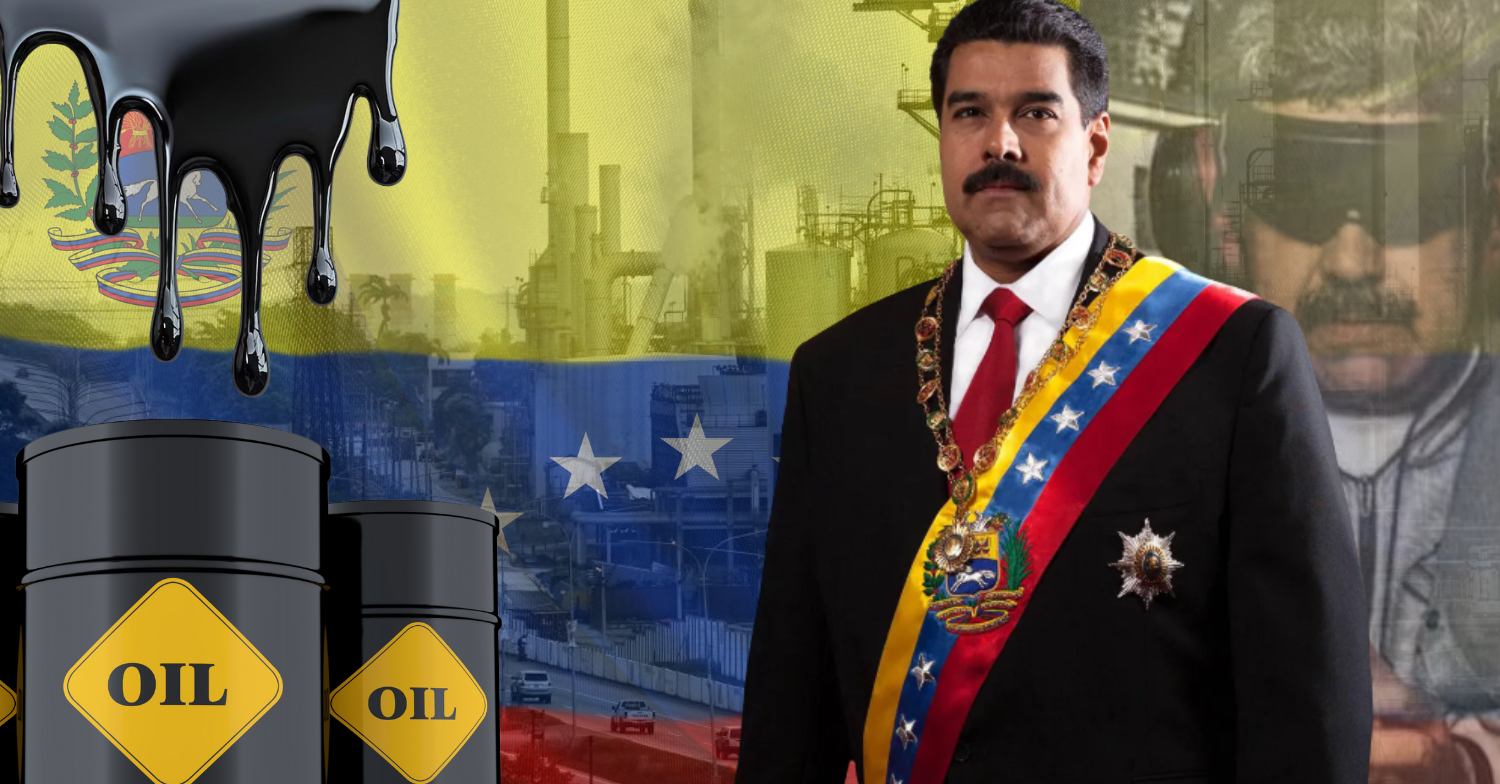
On March 26, 2020, the U.S. Department of Justice indicted Venezuelan President Nicolás Maduro and senior officials on charges of narco-terrorism, drug trafficking, and corruption. A reward of up to $15 million was offered for information leading to his arrest.
This marked a significant shift.
Narco-terrorism blends two powerful frameworks—drug enforcement and counterterrorism—allowing military force to be framed as law enforcement. It collapses the boundary between war and policing, especially when applied extraterritorially.
For critics, this raised a pressing question:
Why Venezuela, and not others?
2024–2026: Force, Again
By 2024–2025, tensions escalated further. U.S. officials repeatedly stated that “all options remained on the table.” In early 2026, multiple international outlets reported U.S. military actions in and around Caracas connected to the arrest and removal of Maduro, described alternately as an extraction, operation, or strike.
Regardless of terminology, the reality was unmistakable: U.S. force was used on Venezuelan soil.
This placed Venezuela in a lineage that stretches back decades—states labeled criminal or illegitimate, then subjected to escalating coercion.
The Comparison That Won’t Go Away
Colombia remains one of the world’s largest cocaine producers. So do other states along the Andean corridor. Drug flows continue into the United States at historic levels.
Yet none of these countries have faced:
- recognition of parallel governments,
- comprehensive economic strangulation,
- or the extraterritorial arrest of sitting heads of state.
The contrast is not accidental. It reflects hierarchies of legitimacy, not consistency of principle.
A Pattern, Not a Theory
From Panama (1989) to Libya (1986, 2011) to Iraq (2003) to Venezuela (2015–2026), the structure repeats:
- Designation (terrorist, dictator, narco-state)
- Delegitimization (sanctions, diplomatic isolation)
- Justification (security, democracy, humanitarianism)
- Force (bombing, invasion, extraction)
- Aftermath (instability borne by civilians)
Minority communities around the world recognize this sequence because they have lived inside its logic. It is not about race as insult. It is about race as patterned vulnerability within global power.
Why This Moment Feels Dangerous
What makes Venezuela especially alarming is its timing.
At home, the United States is rolling back DEI frameworks, narrowing civil-rights enforcement, and re-embracing language of militarized order. Abroad, it is leaning again on coercion, designation, and force—tools historically associated with colonial management rather than moral leadership.
Together, these shifts suggest not confidence, but retreat—away from persuasion and toward domination.
The Question the World Is Asking
This documentary narrative does not argue that Venezuela’s government is innocent, competent, or democratic. That is not the test.
The test is consistency.
If the United States claims moral leadership, it must explain why some drug-linked states are partners while others are targets; why sanctions are humanitarian in theory but devastating in practice; and why force remains the default response to non-alignment in brown and Black nations.
For many across the world, Venezuela is no longer just Venezuela.
It is a warning sign that an older posture—colonial, punitive, selective—is returning, dressed in modern language.
And history suggests that when that posture reasserts itself, the consequences rarely stay confined to one country.
Footnotes / Research Anchors
- April 15, 1986 – Operation El Dorado Canyon (U.S. airstrikes on Libya)
- October 2001 – U.S. invasion of Afghanistan
- March 2003 – U.S. invasion of Iraq
- March–October 2011 – NATO intervention and collapse of Libya
- December 1989 – U.S. invasion of Panama (Manuel Noriega arrest)
- 2000–present – Plan Colombia and U.S. counternarcotics policy
- March 2015 – U.S. sanctions declaration on Venezuela
- January 2019 – U.S. recognition of Juan Guaidó
- March 26, 2020 – DOJ narco-terrorism indictment of Nicolás Maduro
- 2024–2026 – Reported U.S. military actions related to Venezuela