 Staff Journalist
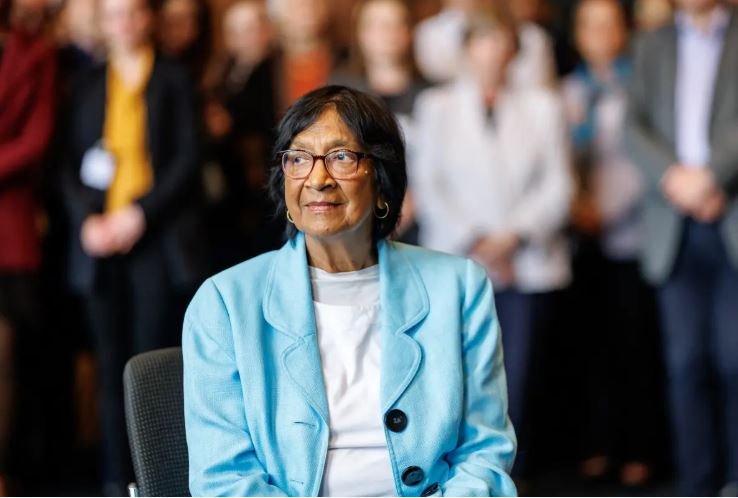
Navi Pillay spent 28 years practicing law under apartheid. During that time, she was not allowed to enter a judge’s chambers.
Think about that.
She could defend people in a courtroom. But the system drew a line around the space where judicial power lived. Years later, she would become a judge herself, then help shape the way the world prosecuted its gravest crimes.
On October 9, the Norwegian Nobel Committee named Pillay the recipient of the 2026 Nobel Peace Prize, recognizing her work to advance peace and international law.
The honor brings global attention to a life spent confronting a question that remains painfully relevant: Who gets protected by the law, and who gets left outside it?
Born in Durban, South Africa, to a family of Indian Tamil heritage, Pillay grew up under a government that made racial discrimination public policy. Her father drove a bus. She became a lawyer, defended opponents of apartheid and challenged a system built to deny people equal standing.
Her work eventually carried her from South Africa to the International Criminal Tribunal for Rwanda, the International Criminal Court and the United Nations, where she served as High Commissioner for Human Rights.
But a list of titles can only tell us so much.
The deeper story is what she did with the authority she earned.
At the Rwanda tribunal, Pillay helped shape a landmark judgment establishing that rape could constitute genocide when used with the intent to destroy a protected group. Survivors’ experiences helped change international law.
She was one of three judges on that case. Her contribution mattered. So did the women whose testimony brought the crimes into focus.
That is where representation becomes more than a talking point.
A woman who had experienced exclusion helped an international court recognize suffering that had too often been dismissed. Her presence brought experience, attention and judgment to decisions with consequences far beyond the courtroom.
For Black communities and others who have fought discriminatory institutions, that history carries weight. The struggle for equal treatment crosses borders. So does the responsibility to defend it.
It also speaks to why Black and minority-owned media must tell these stories with depth. Our readers deserve to know the work behind the recognition, the barriers behind the achievement and the people whose lives were affected.
Pillay’s Nobel Peace Prize gives us an occasion to look closely.
Her lifetime of work gives us a reason to keep looking.
She lived under laws that enforced inequality. She spent her career working to make the law answer to a higher standard.
Human dignity. Equal protection. Accountability.
The pursuit of justice demands all three.